

 0
0
 0
0
Table of Contents
I still remember the first time I opened Omegle.
It was a Tuesday night, I was supposed to be studying, and somehow I ended up in a video chat with a guy in Norway who was eating cereal at 2 a.m. and ranting about black metal. We talked for forty minutes. I never learned his name. I never saw him again. That was the whole point.
That’s the thing about Omegle. It wasn’t really a social network. It wasn’t dating. It was a weird little pocket of the internet where nothing mattered and anyone could show up. A college student from Brazil. A bored dad in Ohio. A kid pretending to be a wizard in his mom’s basement. For a lot of us, it felt like the last truly random corner of the web.
Then, in November 2023, it was gone.
Leif K-Brooks, the guy who built Omegle when he was eighteen, posted a long goodbye letter. He said the site was no longer sustainable, “financially nor psychologically.” After years of lawsuits, moderation nightmares, and the sheer weight of keeping something that big alive, he pulled the plug.
The internet freaked out a little. Not because Omegle was perfect — it absolutely wasn’t — but because it represented something we don’t really have anymore.
Why Omegle Felt Different
You can still find random chat apps today. Dozens of them. OmeTV, Chatroulette, Emerald Chat, Monkey, Camsurf. Some are cleaner. Some are faster. Some actually work on your phone without crashing.
But none of them feel exactly like Omegle did.
Part of it was the simplicity. You opened the site, clicked a button, and you were talking to a stranger. No account. No profile. No algorithm trying to figure out what you wanted. Just you, a webcam, and whoever the universe decided to throw at you.
There was also the chaos. Omegle had no real identity. One chat could be a surprisingly deep conversation about grief or ambition. The next could be someone playing guitar badly in a dark room. The one after that… well, you know what the one after that usually was. It was unfiltered in a way that modern platforms simply refuse to be anymore.
That lack of filtering was both the magic and the problem. If you want to understand how the original format collapsed under its own weight, read our breakdown of why the original random chat died.
What Actually Killed Omegle
A lot of people think Omegle died because it became too sleazy. That’s only half true.
The bigger issue was that the internet changed around it. When Omegle launched in 2009, online anonymity was still normal. People used screen names. They posted weird stuff under fake identities. The idea that you could talk to someone without knowing anything about them was exciting, not suspicious.
By 2023, that world was basically over.
Social platforms had moved toward real names, verified accounts, endless content moderation, and algorithmic feeds. TikTok, Instagram, and YouTube figured out how to keep people scrolling for hours. Meanwhile, Omegle was still doing the same thing it did in 2009 — connecting strangers one video window at a time.
On top of that, the legal pressure became enormous. A lawsuit involving a minor on the platform made national headlines. Lawmakers started asking questions. Payment processors and advertisers got nervous. Running a site that big, that anonymous, and that legally exposed was exhausting.
So Brooks shut it down.
Not with a corporate press release. With a personal letter. That detail mattered. It made the whole thing feel less like a business decision and more like the end of an era. BBC reported that the site had been mentioned in more than 50 cases against paedophiles in the previous couple of years, while The Verge covered the child safety lawsuit that helped push the founder toward closure.

The Search for an Omegle Replacement
If you Google “what happened to Omegle” right now, you’ll find millions of people still looking for answers. More importantly, you’ll find millions of people looking for a replacement.
That’s where the modern random chat landscape gets interesting.
Some platforms tried to become the “new Omegle” by copying the format exactly. Others went in very different directions. A few leaned hard into adult content. A few went the opposite way and built heavy moderation systems to stay safe for mainstream users.
Our tested list of the best adult Omegle alternatives in 2026 covers the platforms that actually deliver today. If you’re looking for the NSFW side of random chat, check our NSFW Omegle alternatives guide for cam2cam options that still work.
The truth is, there probably won’t be one true replacement. The original Omegle existed in a specific moment in internet history. That moment is over. But the desire behind it — the urge to randomly connect with another human being, with no strings attached — is still very much alive.
Why We Still Dream About It
Nostalgia is a powerful drug, and Omegle has a lot of it.
For people who grew up online in the late 2000s and early 2010s, Omegle was part of coming of age. It was where you tested social skills, practiced flirting, got roasted by strangers, saw things you shouldn’t have, and occasionally had a conversation that stuck with you for years.
There’s also something about the randomness that feels therapeutic now. Today’s internet is optimized to show you exactly what you already like. Your feed is a mirror. Omegle was the opposite. It was a roulette wheel. You had no idea who was coming next, what they believed, or what they were going to say.
That kind of genuine unpredictability is rare online in 2026.
What Random Chat Looks Like Now
The platforms that survived Omegle’s shutdown fall into a few camps:
| Category | Examples | Best For |
|---|---|---|
| Clean alternatives | OmeTV, Emerald Chat, Holla | Casual conversation, mobile users |
| Adult alternatives | ChatRandom, SlutRoulette, cam platforms | Explicit, adult-focused chat |
| Interest-based | Topic filters, language matching | Easier conversation starters |
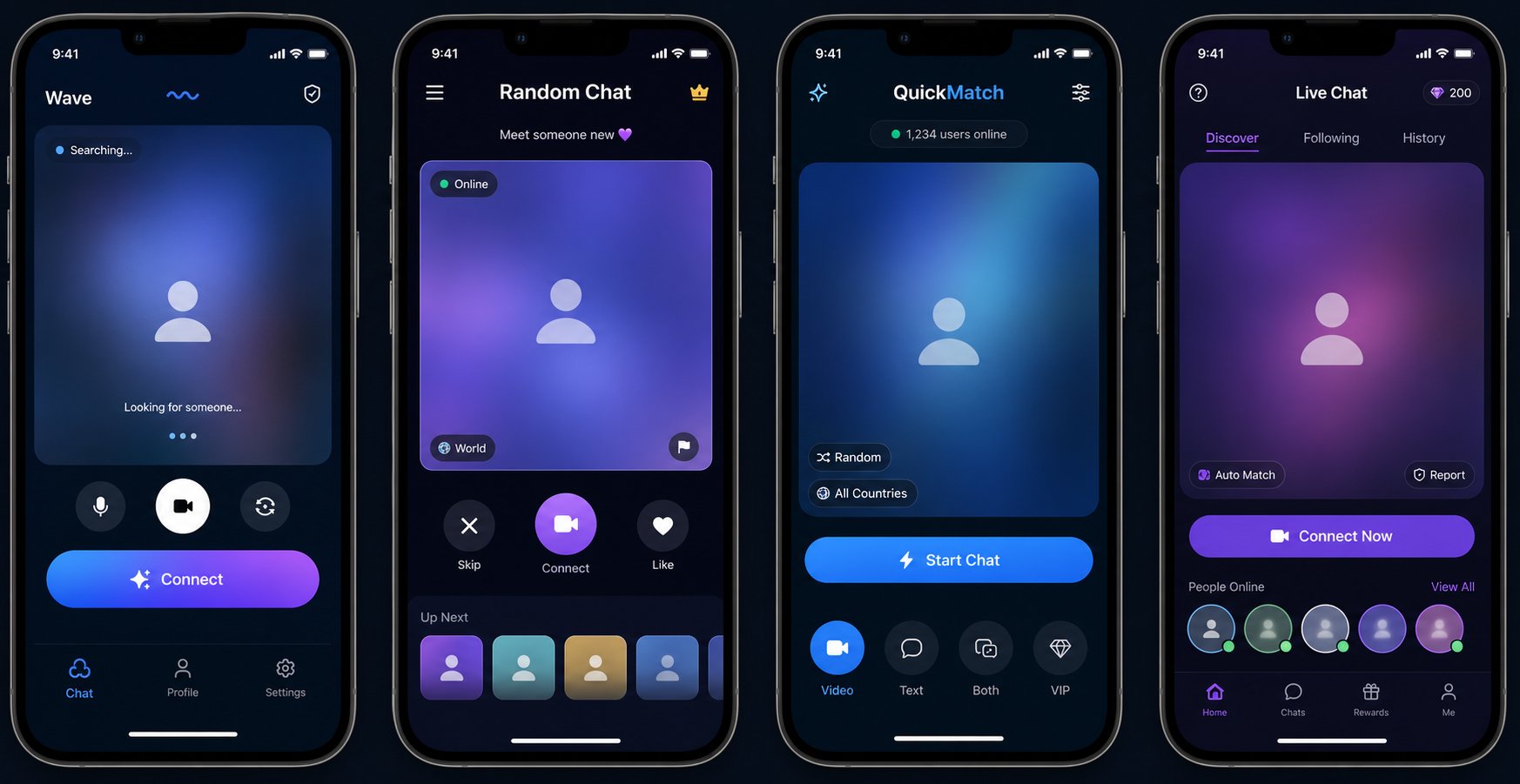
None of them fully replace the old Omegle vibe, but together they cover most of what people want from random chat today. For practical tips on finding real people fast, read our guide on how to find the horniest girls on adult Omegle roulette.
The Safety Problem Hasn’t Gone Away
Here’s the part nobody wants to romanticize.
Omegle’s biggest weakness was always safety. Anonymous video chat is inherently risky. Predators, scammers, trolls, and people recording others without consent were constant problems. The shutdown didn’t fix those issues — it just moved them to smaller platforms with less scrutiny.
If you’re exploring random chat in 2026, you need to protect yourself:
- Never share personal information.
- Don’t show your face and identifying background at the same time.
- Be extremely cautious about anyone asking you to move to another app.
- Assume anything you do on camera can be recorded.
- Use platforms with reporting and moderation tools.
Learn how to spot and avoid bots on video chat sites, and if you want an extra layer of privacy, see our VPN recommendations for random video chat.

The dream of random connection is real. The risks are real too.
Will Omegle Ever Come Back?
Honestly? Probably not in its original form.
The legal and financial environment that killed Omegle hasn’t gotten easier. If anything, it’s gotten harder. Any new version would need massive moderation, age verification, and compliance systems. That costs money, kills the anarchic feel, and pushes the platform toward either a sanitized mainstream product or a paid adult service.
There have been rumors, copycat sites claiming to be “the official Omegle,” and fan campaigns. So far, none of them have brought back the real thing.
Maybe that’s okay. Maybe Omegle’s job was to exist in that specific window of time, give the internet one chaotic decade, and then bow out.
Final Thought
I don’t think people miss Omegle because it was perfect. They miss it because it was weird, unpredictable, and totally free from the polished performance culture that took over the rest of the internet.
It was a place where you could be bored with a stranger at 2 a.m. and somehow feel less alone because of it.
That’s the dream Omegle left behind. And as long as people keep searching for random connection online, that dream isn’t going anywhere.
FAQ
What happened to Omegle?
Omegle shut down in November 2023. Founder Leif K-Brooks cited financial and psychological unsustainability after years of legal pressure and moderation challenges.
Is Omegle coming back?
There is no official plan for Omegle to return. Copycat sites exist, but none are officially connected to the original platform.
What are the best Omegle alternatives?
Popular options include OmeTV, Chatroulette, Emerald Chat, ChatRandom, and various adult-focused random chat platforms. The best choice depends on whether you want a clean or NSFW experience.
Why do people still search for Omegle?
Omegle represented a unique era of anonymous, random online connection. Many users feel nostalgic for the unpredictability and simplicity it offered.
Is random video chat safe?
It can be, but you should never share personal information, avoid showing identifying details, and use platforms with active moderation and reporting tools.